
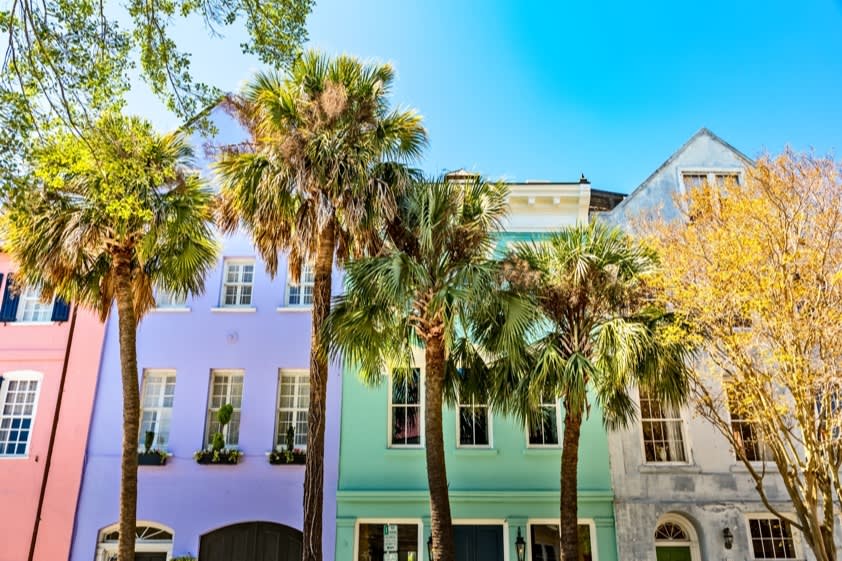
The Sacrificial Protective Layer
In 18th- and 19th-century Charleston, master masons routinely applied traditional lime stucco over soft-fired Charleston grey brick. These historic bricks, fired at lower kiln temperatures, remain extremely porous. Applying a breathable, sacrificial lime stucco coating shields the underlying delicate masonry from driving coastal rain, relentless humidity, and salt air while allowing trapped moisture to escape effortlessly.
The Synthetic Paint Failure Trap
A frequent mistake in modern historic restoration is applying modern elastomeric or acrylic latex coatings over historic masonry. These synthetic paints form an impermeable plastic film that traps internal moisture within the wall assembly. Hydrostatic pressure builds behind the non-breathable layer, leading to severe dampness, moisture entrapment, and catastrophic spalling as the underlying historic brick faces freeze, fracture, and decay.
Breathable Lime Putty Chemistry
Traditional lime stucco relies on elegant, time-tested chemical processes. Slaked lime (calcium hydroxide) reacts slowly with atmospheric carbon dioxide during curing—a process known as atmospheric carbonation—re-forming into solid limestone (calcium carbonate). This mineral transformation creates a vapor-permeable structure with high alkalinity that acts as a natural antimicrobial agent. Furthermore, microscopic dynamic recrystallization gives pure lime stucco unique self-healing qualities when exposed to water.
Natural Earth Pigments & Charleston Patinas
The iconic warm hues across the French Quarter and South of Broad stem from historic mineral pigment formulations. By blending natural earth pigments such as raw umbers, yellow ochres, and Venetian reds into lime washes, original builders achieved soft, glowing earth tones. As the lime wash ages and absorbs atmospheric carbon, it develops the distinguished living patina unique to Downtown Charleston's historic streetscapes.
BAR Preservation Standards & Active Stucco Residences
Charleston’s Board of Architectural Review (BAR) enforces strict historic preservation standards requiring the use of traditional slaked lime mortars and breathable, mineral-pigmented lime washes for historic masonry restorations. For buyers seeking authentic historic architecture, navigating masonry care is essential. Contact The Charleston Group to explore active Downtown Charleston (Zip 29401) historic masonry estates for sale and consult on historic preservation compliance.