

South of Broad reveals Charleston in layers: a narrow alley between garden walls, a harbor view from the Battery, and historic houses with stories extending far beyond their facades. Explore the landmarks and everyday amenities that shape the neighborhood, along with the property details worth investigating before buying or selling here.
A neighborhood best understood at street level
South of Broad occupies the southern end of the Charleston peninsula, below Broad Street and between the Ashley and Cooper rivers. Its streets bring together brick garden walls, ironwork, shaded piazzas and houses from different eras. A short walk can move from a narrow residential lane to open water, with plenty of architectural detail to notice along the way.
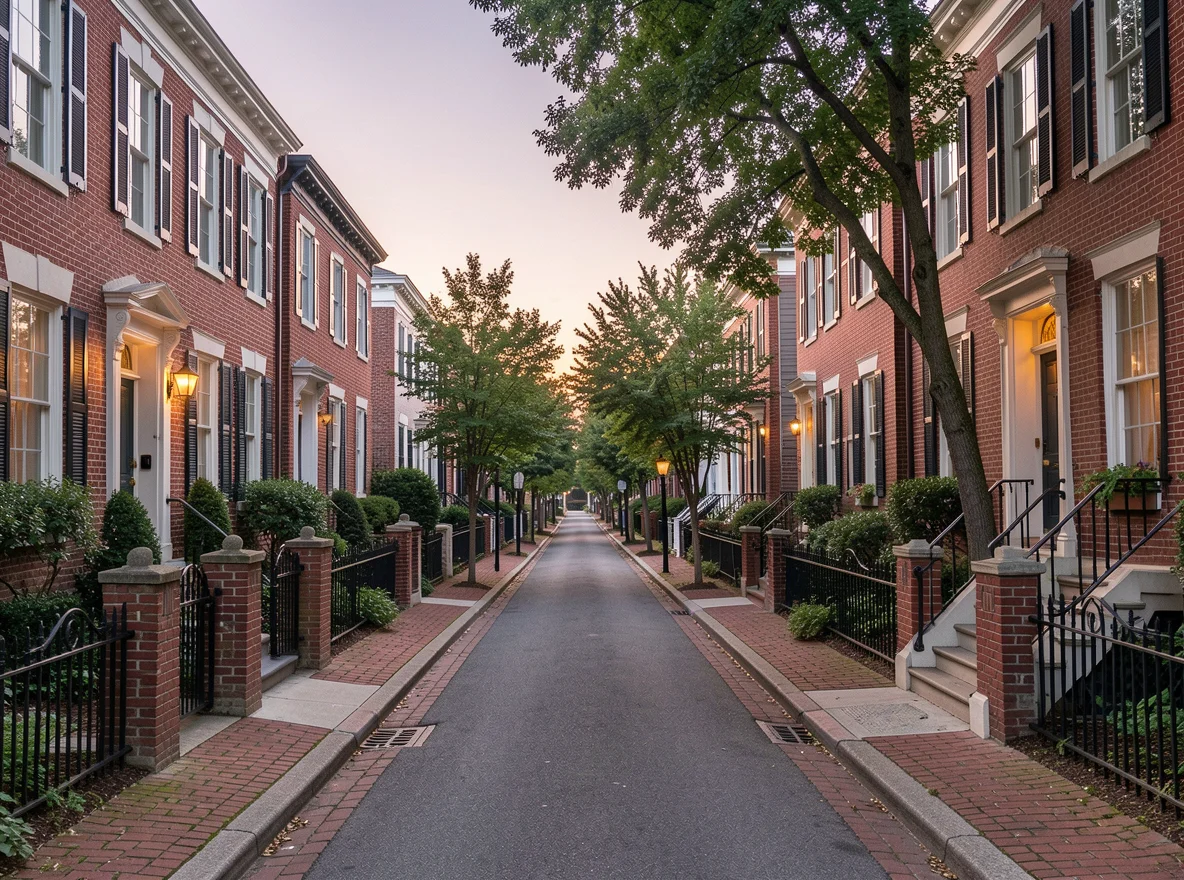
One place to start is Stolls Alley, a narrow passage between Church Street and East Bay Street. Its scale offers a contrast to the broader streets nearby: brick and plaster walls sit close to the path, while gates and foliage provide glimpses of the gardens beyond. Like other historic lanes, it is best enjoyed at a measured pace and with respect for adjoining private property.
Look beyond the grand entrances and the streetscape becomes more varied. Some buildings present a narrow end to the street, with long side piazzas extending toward the garden. Others face outward with symmetrical facades, formal steps or ornate ironwork. Changes in elevation, pavement and sidewalk width are part of the historic setting, so it is useful to check an intended walking route in person.
Not every inviting passage leads to a public destination. Some lanes, courtyards and garden entries are private or subject to access restrictions. Visitors can appreciate the details from public ways and should observe posted signs; buyers evaluating a home beside an alley should also ask how access and maintenance are documented.
A picturesque alley and a deeded right of access are not the same thing. If a property relies on a shared passage, review the survey and relevant easements before making assumptions about its use.
From the Battery to the harbor
At the peninsula’s southern edge, the Battery and White Point Garden offer a different perspective. The waterfront promenade looks across Charleston Harbor, while paths beneath the trees in the garden provide a place to pause among monuments and historic features. The route is also a way to see how the neighborhood’s architecture relates to its setting at the water’s edge.
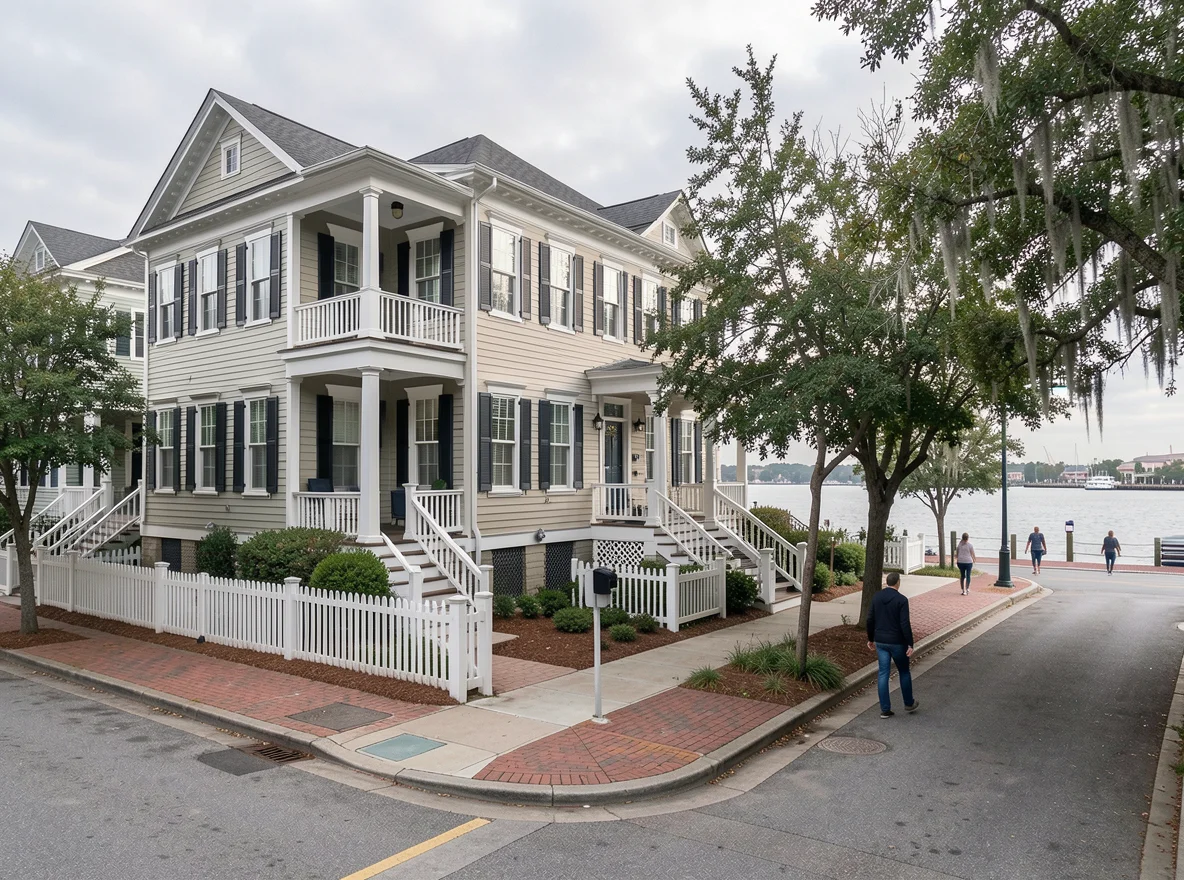
Along East Battery, harbor views accompany a row of historic residences; around the southern tip, Murray Boulevard follows the Ashley River side of the peninsula. These are public waterfront streets and walkways, not a single uninterrupted park trail. Conditions can change with weather, tides and ongoing work, so allow flexibility when planning a route and check local notices when necessary.
The water is beautiful, but it is also central to ownership considerations. Coastal storms, heavy rainfall and tidal flooding can affect individual streets and properties differently. A buyer should review the property’s flood-zone information, available elevation documentation and insurance options rather than drawing conclusions from its distance to the seawall alone.
A visit at more than one time of day can reveal practical differences in light, traffic, parking and exposure to the elements. For a home near the waterfront, ask an inspector about drainage, moisture, exterior materials and maintenance history. Insurance agents and qualified local professionals can help explain property-specific costs and risks.
Landmarks with a longer story
South of Broad’s historic fabric is more than a collection of attractive facades. The Heyward-Washington House on Church Street is a historic house museum associated with Thomas Heyward Jr. and George Washington’s 1791 visit to Charleston. Its interpretation offers a starting point for understanding the people, labor and events connected with the city’s early history. Check the museum’s current schedule before planning a visit.
Near the neighborhood’s northeastern edge, the Old Exchange and Provost Dungeon at Broad and East Bay streets adds another layer to a walk. The building’s history includes commerce, government, conflict and the enslavement of people. White Point Garden also contains monuments and reminders of the city’s military past. Taken together, these places invite a fuller look at Charleston’s history rather than a quick glance at its architecture alone.
Nearby, the colorful houses known as Rainbow Row draw attention along East Bay Street. They are private properties, so enjoy the view from public space. For a quieter architectural walk, turn inland toward Church, Meeting or Legare streets, where residential blocks reveal a mix of building forms, garden walls and shaded entrances.
Explore the South of Broad neighborhood guide
Everyday amenities beyond the landmarks
The area’s location connects residential streets with the broader peninsula. Lower King Street and nearby portions of Broad Street offer places to browse, dine and run errands, while galleries, museums and performance venues are found elsewhere downtown. Choices and opening hours change, so it is worth exploring the blocks around a particular address rather than assuming every service is equally close.
For outdoor time, White Point Garden and the waterfront provide public spaces within the neighborhood. Routes toward other peninsula destinations can be explored on foot, though distances, sidewalk conditions and summer heat may shape the experience. Parking arrangements vary by property and street; a driveway, garage, shared access or on-street permit should be verified individually.
School options and attendance boundaries can change as well. Anyone researching a particular address can confirm current public school assignments with Charleston County School District and ask individual schools about enrollment, programs and transportation. Proximity on a map does not necessarily establish eligibility.
Reading the property as carefully as the neighborhood
Homes here differ substantially in age, layout, condition and ownership history. A restored residence may retain original architectural elements alongside updated systems, while another may present a larger preservation project. Comparing properties calls for more than matching bedroom counts: consider floor plan, outdoor space, parking, recent work and the documented condition of major systems.
Historic district rules and preservation protections can affect proposed exterior work, additions or other changes. Before relying on a renovation plan, confirm the property’s applicable designations and discuss the scope with Charleston’s preservation staff, an architect and the appropriate permitting authorities. Approval requirements and timelines depend on the property and project; a listing description is not a substitute for that review.
For sellers, the same details help tell a clear story. Surveys, permits, maintenance records, insurance information and documentation of prior restoration can help prospective buyers evaluate a home. Recent comparable sales should be considered alongside each property’s distinctive features, and current market conditions should be checked rather than inferred from older neighborhood headlines.
Search South of Broad listings
South of Broad rewards both curiosity and close attention. Walk the public lanes, spend time along the water and explore the stories behind the landmarks; then bring that same care to the practical questions surrounding any individual home. The result is a richer understanding of the neighborhood and a better foundation for a real estate decision.