
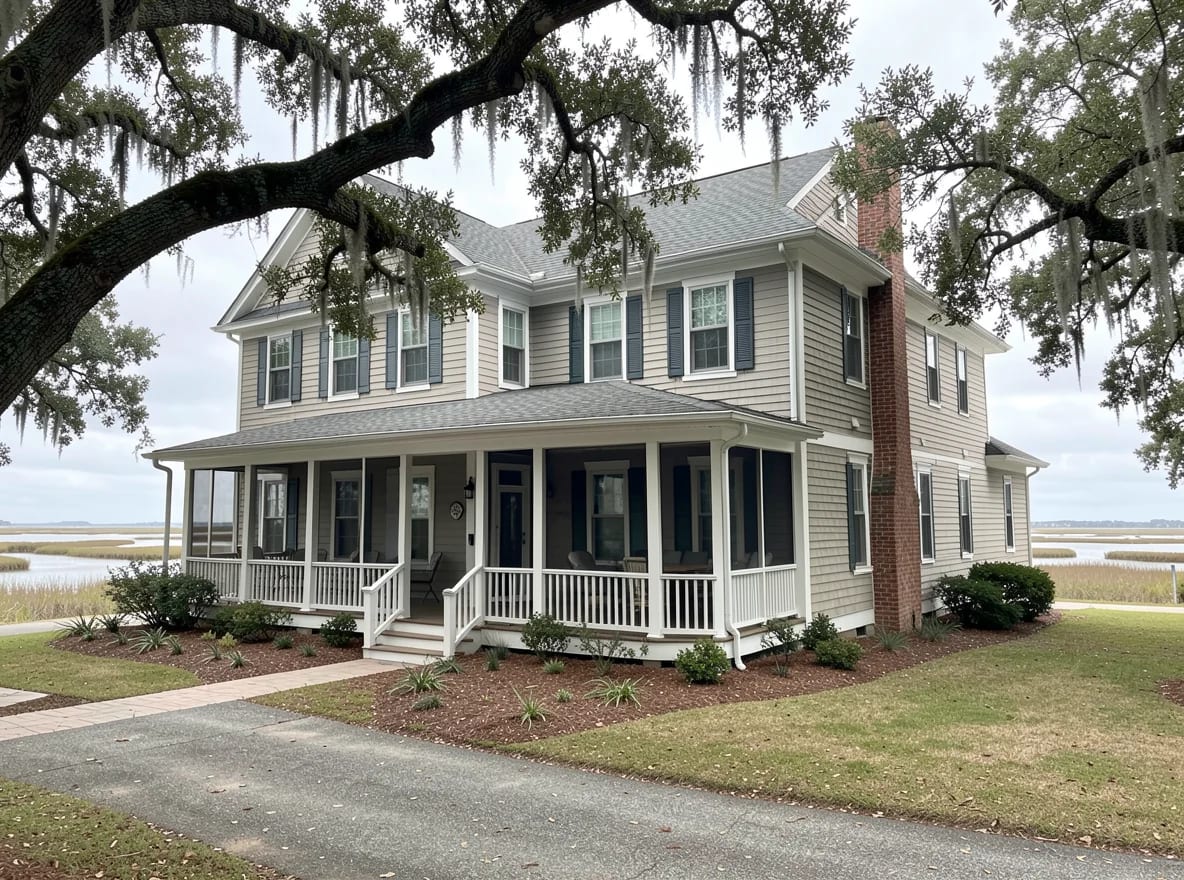
Beyond the Standard Inspection: Navigating Lowcountry Structural & Environmental Realities
Acquiring a multi-million-dollar estate in Greater Charleston—whether a historic antebellum Single House South of Broad, an oceanfront compound on Sullivan's Island, or a deepwater retreat in Mount Pleasant—represents a significant capital investment. However, Charleston's coastal geography, subtropical climate, and historic architecture present unique environmental considerations that standard home inspections often overlook.
To safeguard your investment during the contract contingency period, The Charleston Group enforces a rigorous five-point due diligence protocol tailored specifically to coastal South Carolina real estate.
1. Is the Crawlspace Properly Encapsulated & Climate-Controlled?
Charleston’s high water table and humid subtropical summers make the crawlspace the most critical structural envelope of any raised Lowcountry home:
- Closed vs. Vented Crawlspaces: Traditional vented crawlspaces draw in warm, humid outdoor air that condenses against cool air-conditioned subfloors, fostering fungal growth and wood rot.
- Encapsulation Standard: Verify that the crawlspace features a minimum 12-mil reinforced vapor barrier sealed to foundation piers, closed foundation vents, and a dedicated commercial dehumidifier (such as a Santa Fe unit) maintaining relative humidity strictly below 55% to 60%.
- Subfloor Framing Inspection: Look for evidence of past moisture damage, fungal rot, or sagging floor joists in historic heart pine framing.
2. What Does the South Carolina CL-100 Wood Infestation Report Reveal?
In South Carolina, the CL-100 Official Wood Infestation Report is a mandatory inspection conducted by a licensed pest control professional:
- Target Organisms: The report inspects for subterranean termites, destructive Formosan termites, wood-boring powder-post beetles, and wood-decay fungi.
- Moisture Thresholds: Wood moisture levels exceeding 20% to 28% indicate active fungal decay requiring structural remediation.
- Termite Bonds: Verify that the property carries an active, transferable termite warranty (bond) with a reputable pest control firm (such as Terminix or Stark) that covers both subterranean and Formosan termites with retreat and repair guarantees.
3. How Heavily Has Salt Air Corroded the HVAC Compressors?
Salt air is notoriously aggressive toward metal mechanicals along barrier islands and coastal waterways:
- Coil Deterioration: Outdoor condenser coils exposed to salt spray can experience severe corrosion within 5 to 7 years without specialized protective coatings.
- Coastal Coatings: Check whether units feature factory-applied marine epoxy coatings (such as Coastal / Seacoast packages) or sacrificial zinc anodes.
- Multi-Zone Ductwork: Inspect attic and crawlspace ductwork for proper R-8 insulation and vapor sealing to prevent condensation leaks inside ceilings.
4. Does the Elevation Certificate Match Current FEMA Flood Data?
Under FEMA’s Risk Rating 2.0, flood insurance premiums are calculated on building-specific elevation and distance to water rather than generic flood zones alone:
- Finished Floor vs. Base Flood Elevation (BFE): An up-to-date Elevation Certificate stamped by a licensed surveyor confirms the exact height of the lowest finished living floor relative to local base flood levels. Every foot of freeboard above BFE dramatically lowers annual flood insurance costs.
- Engineered Flood Vents: For elevated homes with enclosed ground-floor storage or garages, ensure engineered hydrostatic flood vents (Smart Vents) are installed to prevent wall collapse during storm surge.
5. What is the Structural & Permitting Status of Private Docks and Bulkheads?
For waterfront properties, marine structures represent significant replacement costs:
- Marine Piling Integrity: Have a licensed marine contractor inspect wooden pilings for marine borers (shipworms and gribbles) that hollow out timber below the water line.
- Seawall & Bulkhead Tiebacks: Inspect stone rip-rap and vinyl bulkheads for soil erosion behind the wall and rusted deadman tieback anchors.
- OCRM Dock Permit Verification: Confirm that the existing dock matches the exact stamped permit on file with the South Carolina Bureau of Coastal Management (OCRM). Unpermitted dock modifications can delay closing or require costly removal.
Private Client Property Due Diligence Advisory
Don't leave your coastal real estate purchase to chance. Connect with Jayson Wingfield & Eric Blackstone at The Charleston Group for introductions to the Lowcountry’s premier structural engineers, historic preservation specialists, and marine inspectors.
Direct Inquiries: (843) 588-8416 | The Charleston Group Luxury Real Estate