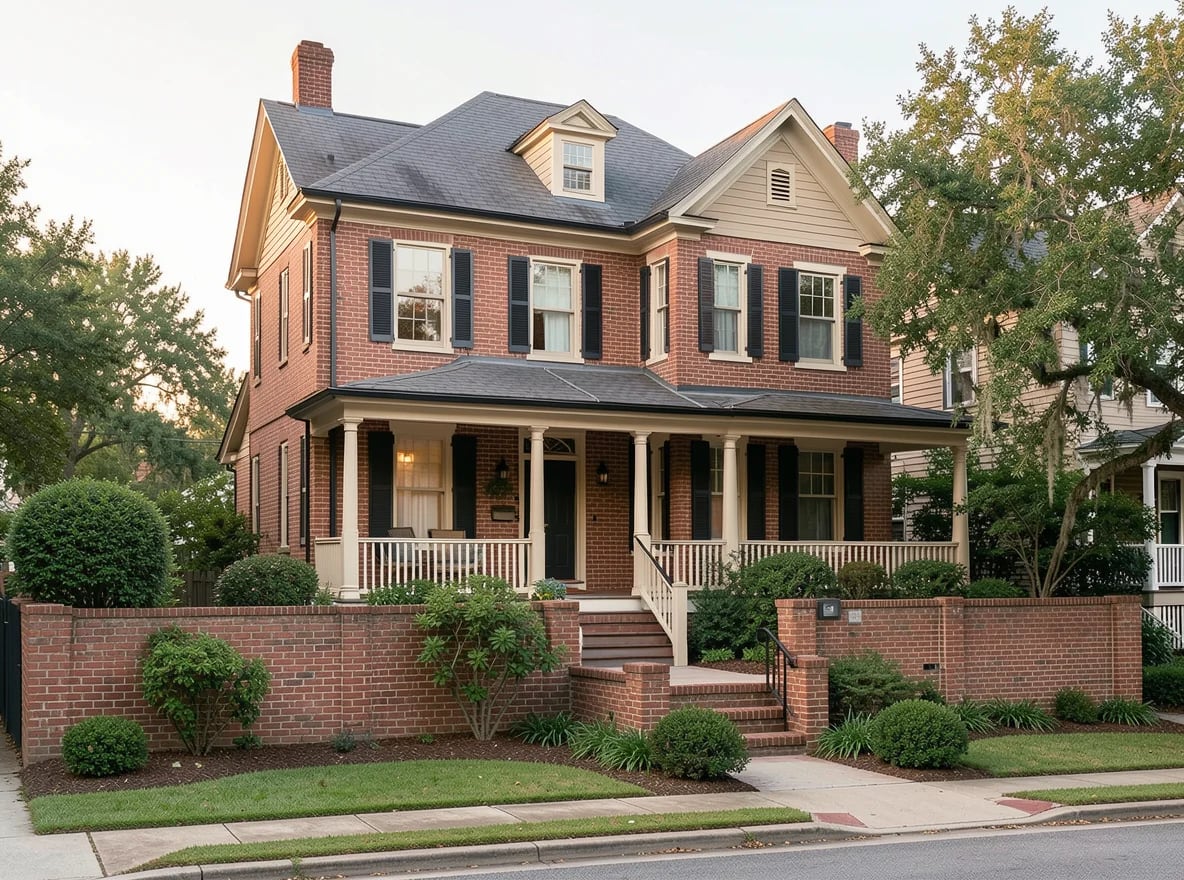
The Real Cost of Preserving History: Line-by-Line Budgeting for an Antebellum Single House
Few architectural forms in America hold the timeless romance of the Charleston Single House. With multi-story piazzas oriented to catch coastal breezes, false street privacy doors, and hand-hewn heart pine timbers, these 18th- and 19th-century residences South of Broad and throughout the French Quarter represent the pinnacle of historic living.
However, restoring an antebellum residence is a specialized craft requiring traditional artisan trades, conservation materials, and adherence to strict Board of Architectural Review (BAR) standards. To help luxury buyers budget with total clarity, The Charleston Group has compiled this realistic line-by-line cost guide based on recent downtown restorations.
1. Slate & Standing-Seam Copper Roofing ($45,000 – $120,000+)
Historic downtown homes require period-authentic roofing materials approved by the BAR:
- Natural Quarried Slate: Authentic Welsh, Vermont, or Buckingham slate tiles installed with copper roofing nails on tongue-and-groove decking typically run between $28 and $45 per square foot installed.
- Copper Flashing & Valleys: Hand-soldered standing-seam copper valleys, chimney crickets, and decorative leader heads ensure a 75- to 100-year waterproof lifespan.
- Standing-Seam Metal: For kitchen dependencies or piazza roofs, hand-crimped 16-ounce standing-seam copper or 5V crimp terne metal is standard.
2. Traditional Lime Mortar Repointing & Stucco ($35,000 – $95,000)
Masonry in historic Charleston demands non-hydraulic lime putty mortar:
- The Portland Cement Trap: Modern Portland cement is too hard and inflexible for soft, low-fired historic Carolina clay bricks. When Portland cement is used, rising dampness and thermal expansion fracture the faces of historic bricks (known as spalling), permanently destroying original masonry.
- Raking & Lime Repointing: Joints must be hand-raked and repointed using traditional oyster-shell lime and sand aggregate matched to original color and binder ratios ($18 to $30 per square foot of wall surface).
3. Piazza Reconstruction & Structural Leveling ($50,000 – $150,000+)
Stacked double piazzas are the iconic signature of the Single House, but multi-story wooden porches naturally settle over centuries:
- Piazza Jacking & Sills: Replacing rotted heart pine sills, sistering joists, and leveling stacked columns with hydraulic jacks typically requires $25,000 to $45,000 in preliminary structural stabilization.
- Custom Cypress Millwork: Replicating historic chamfered columns, turned balusters, and tongue-and-groove piazza flooring with rot-resistant sinker cypress runs $35,000 to $80,000 depending on linear footage.
4. Three-Coat Lime Plaster & Heart Pine Restoration ($40,000 – $110,000)
- Lath & Plaster Preservation: Rather than tearing out original walls for drywall (which ruins historic thermal mass and acoustic damping), preservation plasterers stabilize original lath and apply traditional three-coat lime plaster with horsehair binder ($15 to $25/sq ft).
- Cornice & Medallion Casting: Recreating historic acanthus-leaf ceiling medallions and dentil crown molding from rubber molds costs $4,000 to $12,000 per room.
- Virgin Heart Pine Flooring: Sanding, hand-scraping, and oil-finishing 200-year-old wide-plank heart pine boards costs $8 to $16/sq ft.
5. Concealed Mechanical, Electrical & Plumbing ($50,000 – $120,000)
- High-Velocity Ductwork & Mini-Splits: Feeding flexible 2-inch mini-ducts through ceiling joists or installing concealed VRF ceiling cassettes preserves original 12-foot plaster ceilings without dropping soffits ($35,000 to $65,000).
- Rewiring & Service Upgrades: Upgrading archaic knob-and-tube or 100-amp service to modern 400-amp panels with whole-home surge suppression costs $20,000 to $35,000.
6. BAR Submissions & Architectural Fees ($25,000 – $60,000+)
Navigating the City of Charleston Board of Architectural Review requires measured architectural drawings, historic paint analysis, structural engineering stamps, and public hearing representation.
Offsetting Costs with 25% to 45% Historic Tax Credits
The single greatest financial tool for downtown buyers is the South Carolina Historic Rehabilitation Tax Credit under SC Code § 12-6-3535. Qualifying restorations earn a 25% state income tax credit for homeowners and up to 45% in stacked credits for income-producing properties—saving between $75,000 and $200,000+.
Crucial Rule: You must receive Part 2 approval from the State Historic Preservation Office (SHPO) before any physical work begins. Explore our comprehensive SC Historic Rehabilitation Tax Credit Guide to calculate your exact savings.
Private Historic Property Advisory
Before making an offer on a historic property requiring restoration, speak with Jayson Wingfield & Eric Blackstone at The Charleston Group for introductions to Charleston’s premier preservation architects and lime-masonry contractors.
Direct Inquiries: (843) 588-8416 | The Charleston Group Luxury Real Estate