

I’On’s paths, waterways, and Lowcountry-inspired architecture give this Mount Pleasant neighborhood a distinctive sense of place. Explore how its village design shapes daily life—and what to investigate before buying or selling a home here.
A Village Designed Around the Walk
In I’On, a walk can move from a shaded residential street to a waterside path and then toward the village center. The neighborhood’s connected streets, porches, and shared outdoor spaces create a different experience from a community organized primarily around wide roads and distant destinations. It is a place worth exploring on foot as well as by car.
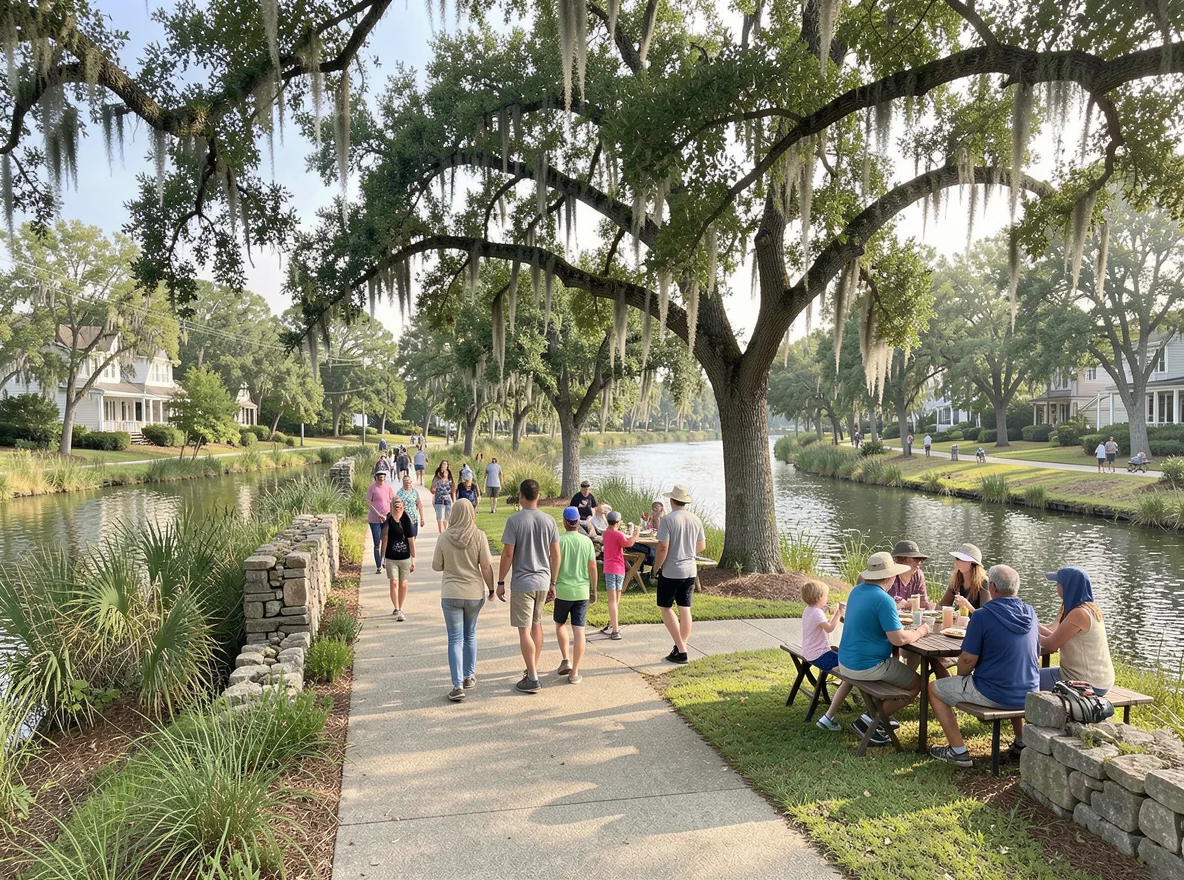
Developed beginning in the late 1990s, I’On drew on traditional neighborhood design and New Urbanist ideas: a mix of uses, streets scaled for walking, and homes with architectural details inspired by the Lowcountry. The result is not a historic district, but a newer community that borrows from the region’s established building traditions.
Paths and green spaces are central to that character. Water views add another layer, with lakes and canal-like waterways contributing to the scenery. A home’s relationship to those features varies by address, so take time to see the view, the route to the nearest path, and any access restrictions in person rather than relying on a map or listing description.
A water view and a right to access the water are different things. Confirm the property boundaries and applicable community rules before making either part of your decision.
Walking the same route at different times of day can reveal details that photographs miss: shade, traffic at crossings, lighting, and the distance from a particular home to the village center. If a specific route or feature matters to you, check its current condition and whether it is available for your intended use.
Amenities and Everyday Connections
The village center brings a mix of businesses and gathering places into the neighborhood setting. Beyond I’On, Mount Pleasant offers additional dining, shopping, parks, and services. Shem Creek and the Charleston peninsula are also part of the broader area, though travel times depend on the route and traffic.
Recreation is another part of the conversation. The I’On Club offers facilities that include swimming, tennis, and fitness; membership terms, availability, and fees should be confirmed directly with the club. Do not assume that buying a home automatically includes access to every facility or activity.
For day-to-day planning, consider the destinations you use most often and test the trip from the specific address. A convenient neighborhood location can feel different during a weekday commute than it does on a weekend showing. If schools are part of your research, verify current attendance zones, enrollment requirements, and options directly with the relevant district or school.
Explore the I’On neighborhood guide
Lowcountry Details, Individual Homes
Architecture gives the neighborhood much of its visual texture. Porches, shutters, varied rooflines, and gardens lend many homes a connection to regional traditions, while individual properties differ in size, layout, finishes, and outdoor space.

Look beyond the facade when comparing properties. A porch may face a street, garden, or water feature; some homes have more private outdoor areas than others. Interior layouts, parking arrangements, and the amount of maintenance required can vary considerably, even among homes that share a similar architectural vocabulary.
Community design standards can help maintain a cohesive streetscape, but they can also affect exterior projects. Before planning a renovation, request the current governing documents and ask about the review process for changes such as paint colors, additions, landscaping, and fencing. Municipal permits may also be necessary, depending on the work.
Coastal conditions deserve attention during due diligence. Ask about the age and maintenance history of the roof, exterior materials, windows, and drainage systems. An inspection and property-specific insurance quotes can help turn a beautiful first impression into a clearer picture of ongoing ownership costs.
Before budgeting for an exterior project, check both community design requirements and Mount Pleasant permitting rules; approval from one does not necessarily replace the other.
What Buyers and Sellers Should Compare
For buyers, the most useful comparison is often between individual properties rather than between neighborhood averages alone. Location within I’On, lot characteristics, water views, condition, square footage, and recent improvements can all influence how a home is positioned. Review current listings and recent comparable sales with an agent, and account for any association assessments, club costs, taxes, and insurance in the overall budget.
Request association documents early enough to review fees, responsibilities, restrictions, and any disclosed planned assessments. If a property adjoins a canal, lake, or shared green space, ask who maintains the adjoining area and whether easements or setbacks affect the lot. A survey, title review, and professional advice can help clarify property-specific questions.
For sellers, preparation starts with the features a buyer can verify: a well-maintained porch, documented improvements, clear information about parking and outdoor space, and records for major systems. A pricing discussion should consider recent comparable sales and current competition, while recognizing that water frontage, layout, and condition can make seemingly similar homes quite different.
Make the Most of a Visit
Start with the home, then look at the routes around it. Walk toward the paths and village center, notice the relationship between public and private spaces, and make a list of questions about amenities, maintenance, and access. For sellers, viewing the property through that same lens can help identify the details worth documenting before it reaches the market.
I’On’s appeal is in the combination: water and greenery, connected streets, and homes shaped by Lowcountry design. A thoughtful visit—and a careful review of the property-specific details—can help buyers and sellers understand how those elements come together at a particular address.